How School Holiday Intensive Programs Build Skills Fast

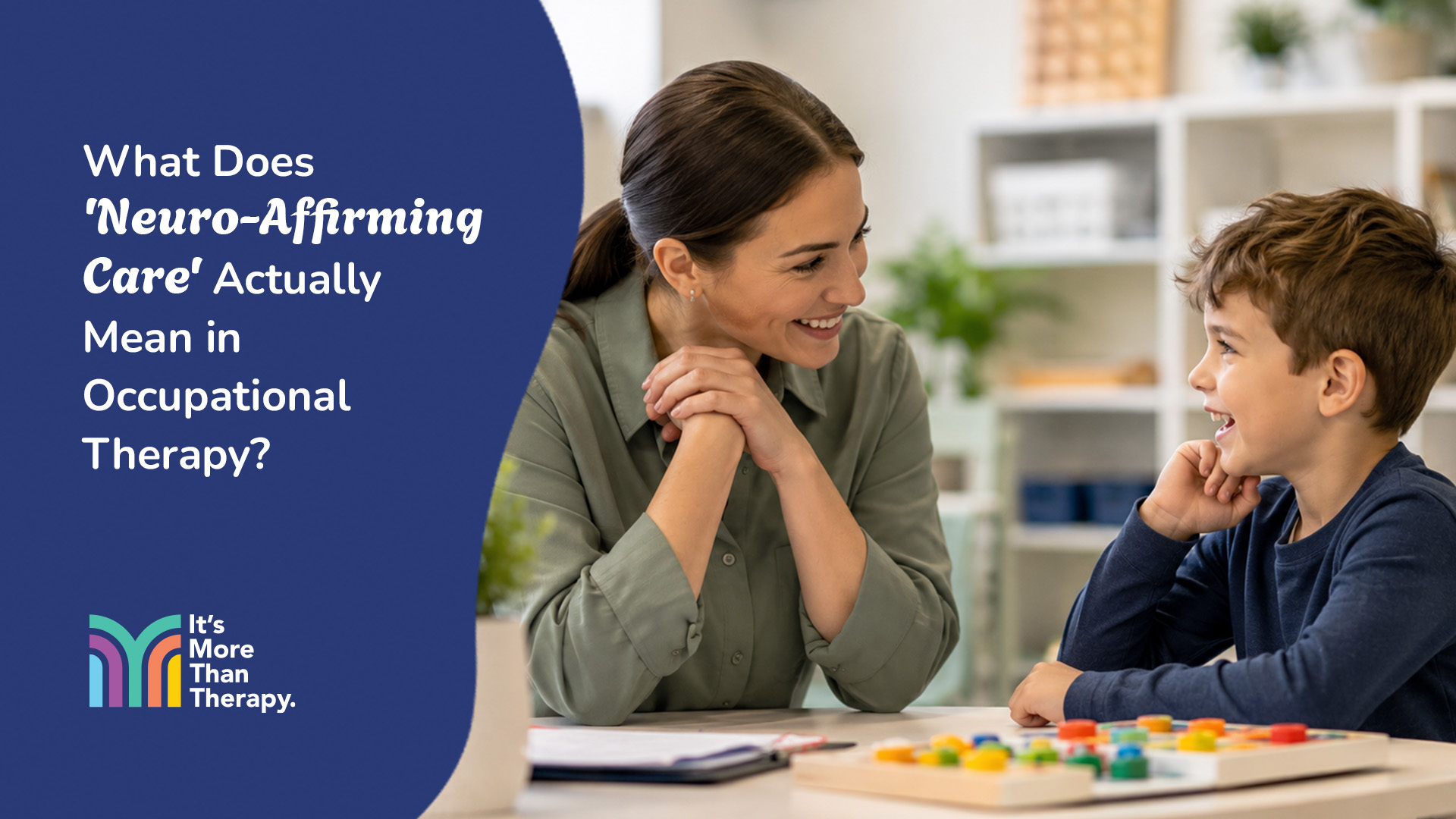
Within the sphere of occupational therapy, there are terms that get used a lot. Maybe you’re here because you’re looking for the answer to the question: What is neuro-affirming care in occupational therapy?
Neuro-affirming care is an approach that respects each individual’s neurological differences, rather than trying to change or diminish them. In occupational therapy, it looks like working with a person’s natural way of thinking, feeling, and looking at the world-not against it. Rather than looking at the gaps of what someone cannot do, neuro-affirming care builds on the strengths of the individual, and supports meaningful participation in daily life.
If you have ever heard the term and wondered what it looks like in daily life, let this guide give you a better understanding.
At its core, neuro-affirming care starts with a simple but powerful idea: neurological differences such as autism, ADHD, dyspraxia, and sensory processing differences are not deficits to be corrected. They are simply different ways of experiencing and interacting with the world.
A neuro-affirming approach respects this. The therapist does not set goals based on making someone appear more neurotypical, the individual’s sensory needs are taken seriously, and their communication differences are accommodated rather than suppressed. This it means the person receiving support has a genuine say in what their goals look like and how they want to achieve them.
This is a meaningful shift away from older, compliance-based models that measured success by how well someone could mask their natural traits or conform to neurotypical expectations.
Occupational therapy is a natural fit for a neuro-affirming approach because it is already focused on helping people engage with everyday life on their own terms. When OT is delivered through a neuro-affirming lens, a few things look different in practice:
Goals are set collaboratively. Rather than a therapist deciding what a person should be able to do, goals are shaped around what matters to the individual and their family. A child who communicates differently will have their input sought in a way that works for them.
Sensory needs are accommodated, not minimised. If someone needs movement breaks, a quieter environment, or specific textures and lighting to feel regulated, those needs are built into the session rather than worked around or dismissed.
Stimming and self-regulation strategies are respected. Many neurodivergent people use repetitive movements or sensory-seeking behaviours to manage their nervous system. A neuro-affirming OT will not discourage these strategies unless they pose a genuine safety concern.
Strengths lead the way. Sessions are built around what a person is good at and what brings them joy, using those strengths as a foundation for building skills that matter to them.
There is no pressure to mask. Masking, or suppressing natural traits to appear more neurotypical, comes at a significant cost to mental health and wellbeing. Neuro-affirming care creates a space where people do not feel they have to perform.
Neuro-affirming care is particularly meaningful for autistic individuals, people with ADHD, those with sensory processing differences, and anyone whose neurological profile has historically been treated as something to fix rather than support.
It is also deeply relevant for families and carers. When a family understands and embraces a neuro-affirming framework, it changes the way they engage with their loved one at home, at school, and in the community. Goals become more realistic, communication improves, and the whole dynamic tends to shift toward connection rather than correction.
For NDIS participants, a neuro-affirming approach ensures that funded supports are genuinely working toward the individual’s wellbeing, not simply toward compliance with external expectations.
There is growing recognition across Australia’s allied health and disability sectors that traditional, deficit-focused approaches can cause harm, particularly for autistic people and others who have spent years being told that the way they naturally exist in the world is wrong.
Research increasingly supports the view that when neurodivergent individuals receive support that affirms rather than suppresses their identity, outcomes improve significantly. Mental health outcomes, self-advocacy, and long-term independence are all stronger when people feel genuinely accepted, not just managed.
For parents choosing an OT for their child, or for adults seeking support for themselves, understanding whether a provider takes a neuro-affirming approach is one of the most important questions you can ask.
At It’s More Than Therapy, neuro-affirming care is not just a concept, it shapes how every session is planned and delivered. Our occupational therapists take the time to understand each person’s unique neurological profile, communication style, and sensory needs before setting any goals.
We work collaboratively with individuals, families, and support coordinators to ensure therapy is meaningful, respectful, and genuinely useful. Whether we are supporting a child through play-based OT, completing a functional capacity assessment, or helping an adult build independence at home, our approach starts from a place of acceptance.
Our clinic in Wyong has been designed with sensory needs in mind, and our team has experience supporting autistic individuals, those with ADHD, and a wide range of neurodivergent profiles across all ages.
If you are looking for occupational therapy that truly sees and supports the whole person, we would love to hear from you. Whether you are an NDIS participant, a parent, or a support coordinator, our team is here to have a genuine conversation about what the right support looks like.
Contact It’s More Than Therapy today to book an initial consultation or learn more about how our neuro-affirming approach to occupational therapy can make a real difference.